How I Got Rid of the Bump on My Foot in Just Two Weeks

My name is Sarah, I'm 58, and for almost six years I dealt with a bunion that kept getting worse. It started as a small bump I barely noticed. By year three, I couldn't wear most of my shoes without pain.
I tried everything. Gel spacers from Amazon. Wide shoes. Toe socks. A hard plastic night splint with one fixed angle, which either did nothing at all or left marks on my skin, depending on how tightly I strapped it.

My podiatrist looked at my foot for about eight minutes and gave me two options: surgery, or live with it.
I chose neither. Here's what happened instead.
What is Hallux Valgus?
First, I had to understand what I was actually dealing with. "Bunion" is the common name, but the medical term is Hallux Valgus, which literally means "big toe turning outward."
Here's what most people get wrong: a bunion is not a growth. Nothing is growing on the side of your foot. What's actually happening is your first metatarsal bone is slowly being pushed outward by a muscle imbalance in the soft tissue around the joint.


The muscles on the outside of your big toe tighten. The muscles on the inside stretch and weaken. Over time, this imbalance pulls the toe further and further out of alignment. The "bump" is simply the bone head pressing against your skin.
Once you understand that, you understand why almost nothing I bought worked. The tension is the problem, and none of those products applied any tension. A gel spacer holds a gap between two toes. It does not pull anything back. It does not release anything. It just sits there being comfortable.
What Are the 5 Consequences of Hallux Valgus?
I wish someone had told me this earlier. A bunion is not just a cosmetic problem. When your big toe shifts, it triggers a chain reaction through your entire body:
1. Chronic pain that spreads. The joint inflammation doesn't stay in your toe. It radiates into the ball of your foot, making every step painful. Most people don't realize their foot pain is connected to the bunion.

2. Your other toes deform. As the big toe drifts, it pushes against the second toe. Over time, this causes hammertoes, crossover toes, and calluses that make walking even harder.

3. Your gait changes. You start walking on the outside of your foot to avoid the pain. This puts abnormal stress on your ankles, knees, and hips. Back pain that seems unrelated? It often traces back to a bunion.
4. Your balance deteriorates. The big toe provides 40% of your foot's push-off power. When it can't grip the ground properly, your balance suffers. For people over 50, this means a real increase in fall risk.
5. It gets worse every single year. A bunion never stays the same. The angle increases gradually, the pain intensifies, and the joint stiffens. What starts as mild discomfort becomes a daily problem.
Bunion Removal Surgery
Let me be clear: I seriously considered surgery. I consulted two surgeons. Here's what the procedure actually involves:

The surgeon cuts the metatarsal bone (an osteotomy), shifts it back into position, then fixes it with titanium screws or pins. The bone needs 6 to 12 weeks to heal. During that time, you can't put weight on your foot.

Why You Must Avoid Surgery
After researching for weeks, I compiled the reasons that convinced me surgery was not the answer:
The recurrence rate is alarming. 30 to 50% of bunion surgeries either fail or the bunion returns within a few years. The surgery corrects the bone position, but it does nothing to fix the soft tissue imbalance that caused the bunion in the first place. The same forces that pulled your toe out of alignment are still there.
The cost is staggering. $5,000 to $15,000+ out of pocket. Even with insurance, most people pay $2,000 to $4,000 in copays, time off work, and physical therapy.
The recovery is brutal. No weight-bearing for 6 to 12 weeks. Crutches or a knee scooter. You can't drive. You can't work (if your job requires standing). Some people experience nerve damage, stiffness, or chronic swelling that never fully resolves.
The complications are real. Infection. Nerve damage. Overcorrection (where the toe swings too far the other way). Hardware irritation from the screws. Stiffness in the joint that limits movement permanently.
What I Found Instead
After months of failed products and hours of research, I stumbled on a recommendation in a Facebook group for people with foot problems. A woman had posted photos of her progress with something she'd been wearing in the evenings for a few weeks. The alignment difference was visible.
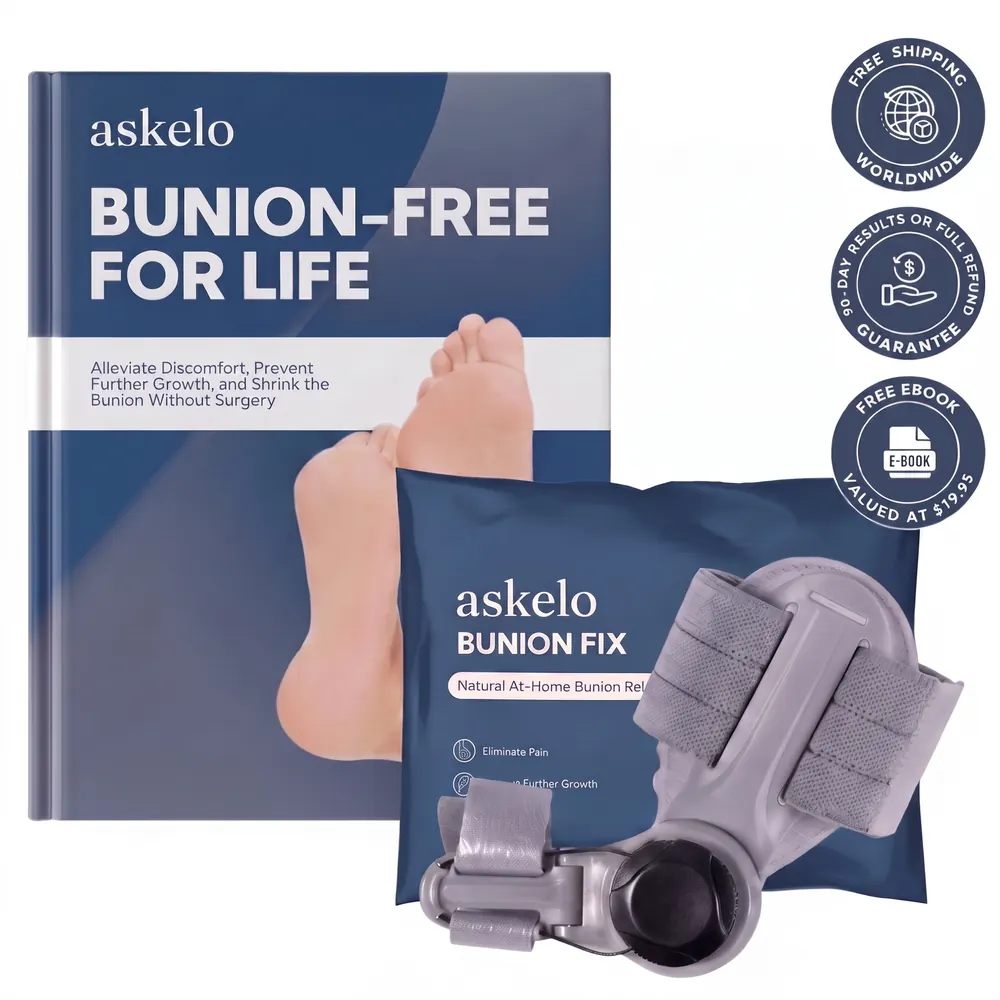
The product was the Askelo™ Bunion Fix.
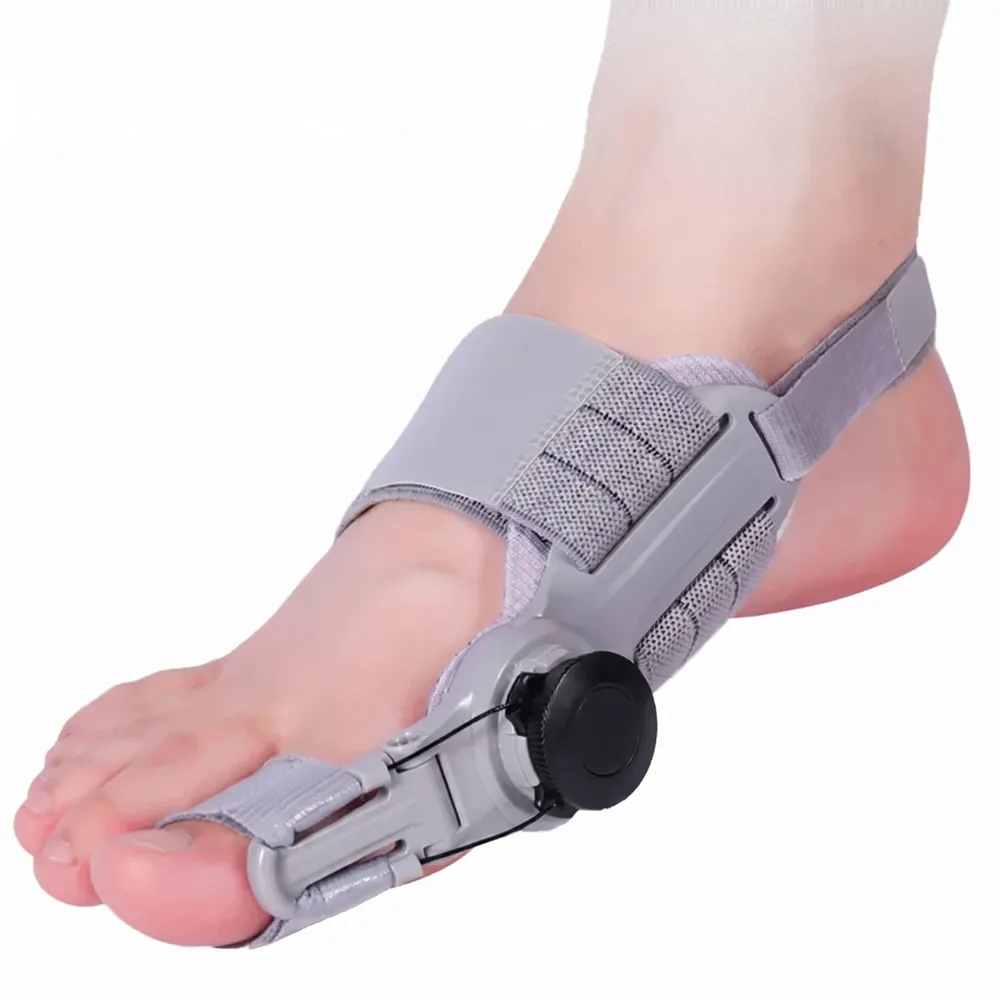
It was not what I expected. Everything else I'd bought was passive. This one actually does something.
It uses a patented hinge joint mechanism to deliver what they call advanced alignment therapy: a steady, controlled pull that draws the big toe back toward its natural position and releases the built-up tension on the outside of the joint. The hinge is what makes it different from the rigid splint I'd already thrown away. The joint still moves. The pull stays constant while it does.
Two things sold me before I ordered. First, you set the intensity yourself, so you're not stuck at one fixed angle that's either useless or unbearable. Second, one unit fits everyone, from a child's foot to a men's size 13, and the same unit works on either foot because the design is interchangeable.
How I Actually Use It (And the One Thing You Should Know First)
This is the part I want to be honest about, because it's what I would have wanted to know before I ordered.
You do not wear this inside your shoes. The Bunion Fix is a session, not an insert. You sit down, put it on, and let it work.
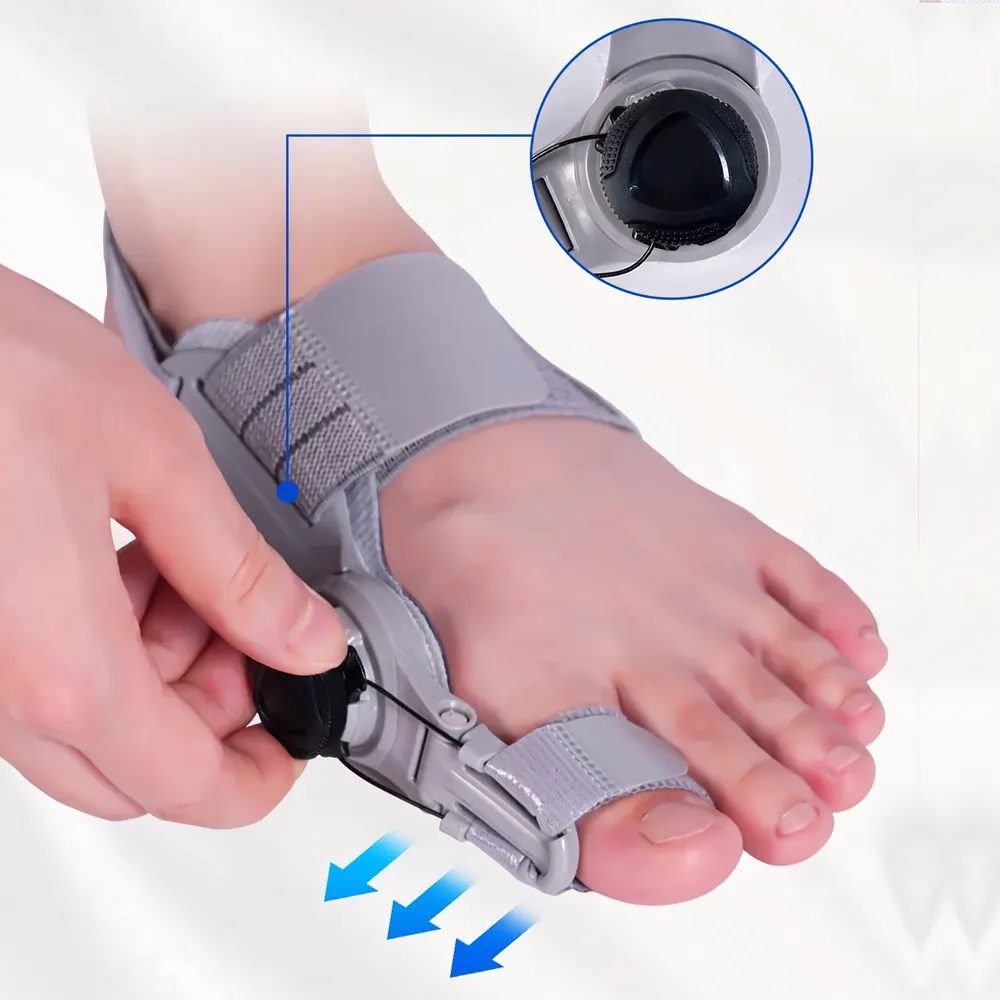
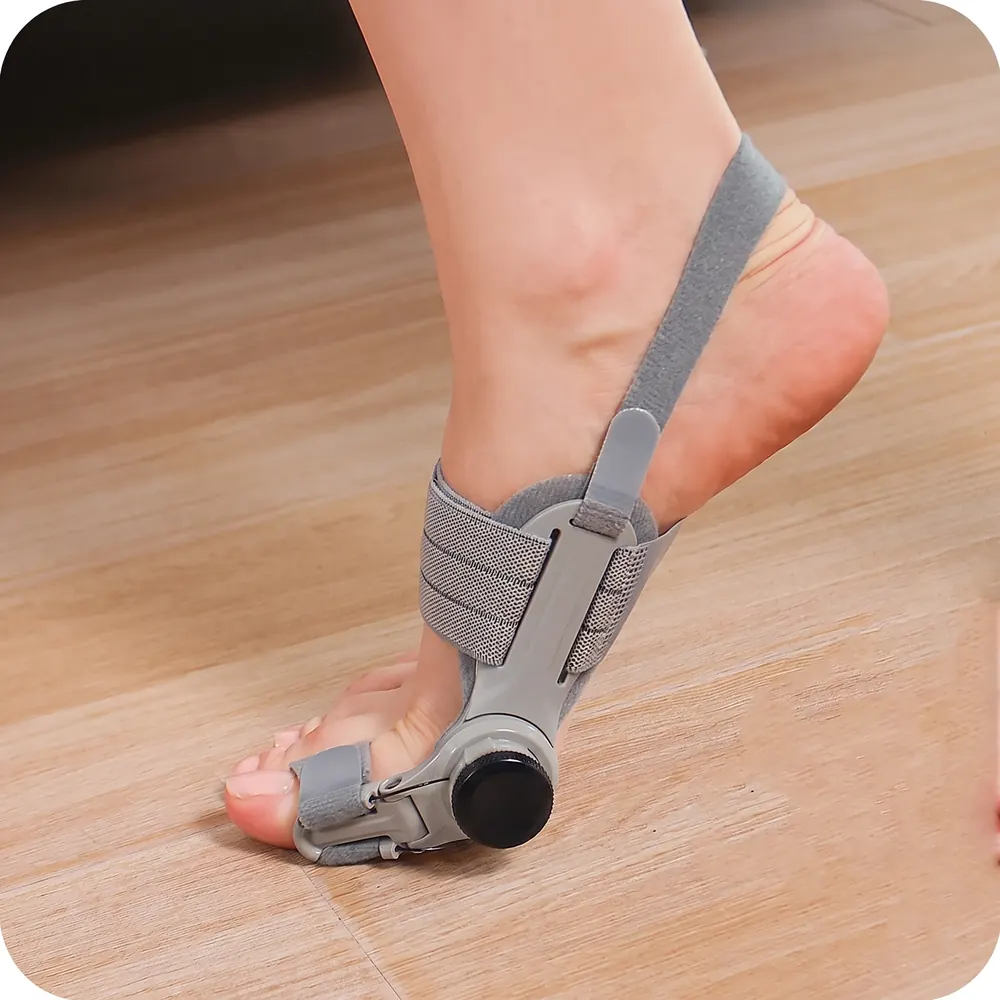
I started with 30 minutes in the evening while watching television. After the first week I was up to an hour, sometimes two. These days I often fall asleep with it on, which is what they recommend once you're used to it.
The first session felt strong. Not painful, but I could feel the pull, and I remember thinking, well, at least something is finally happening. By the third evening it felt completely normal. If yours feels intense at first, turn the tension down and build up. That's what the adjustment is there for.
The Product Quality Is More Reliable
One thing that concerned me about the cheap gel spacers from Amazon was the material. Several reviews mentioned skin reactions, tearing after a few uses, and a chemical smell out of the box.
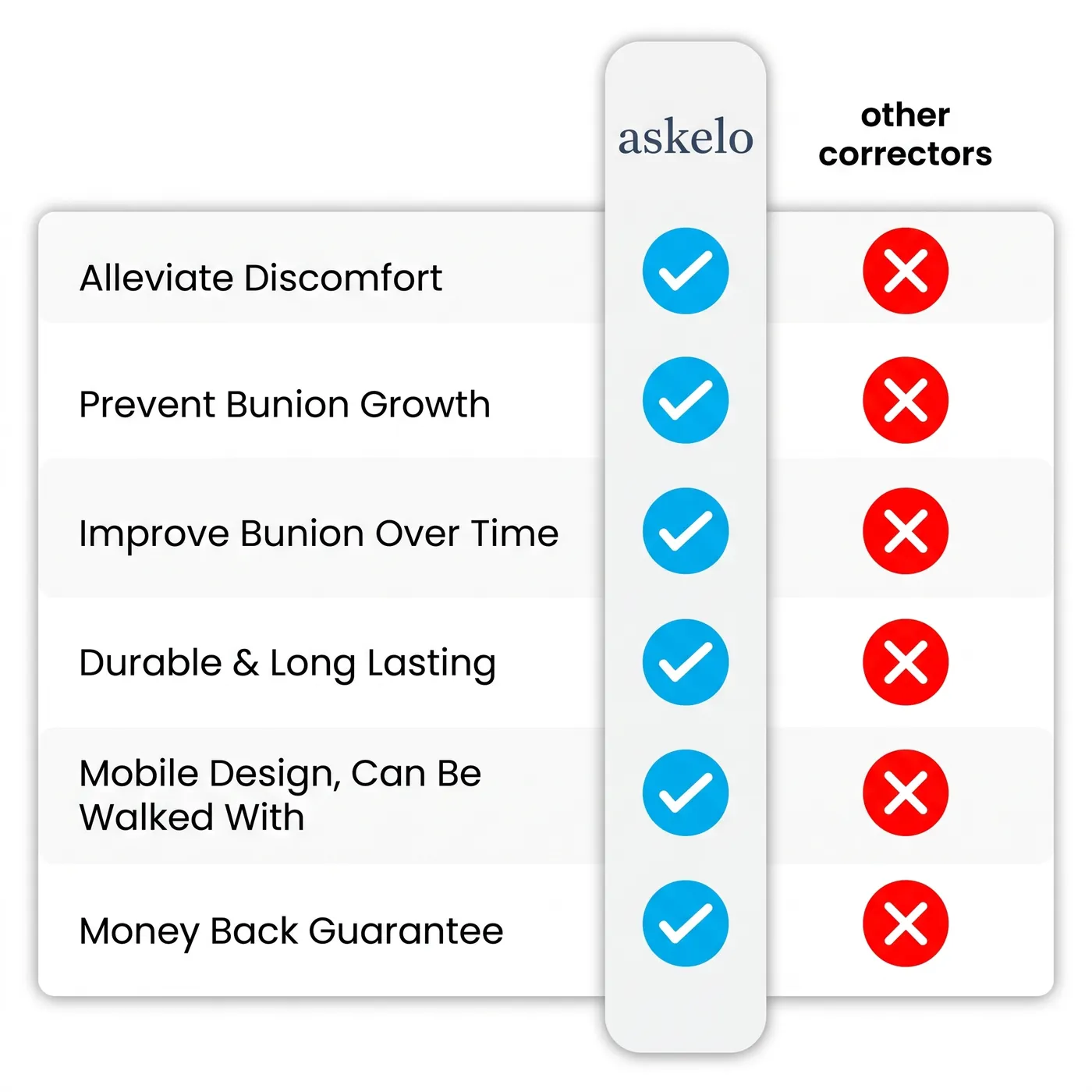
The Askelo Bunion Fix is built to be used every day for months, not thrown out after three weeks. Mine has been through nightly use since spring and the hinge is as firm as the day it arrived. It also isn't sold on Amazon or eBay, which is apparently deliberate, and after what I'd wasted on marketplace copies I was relieved to hear it.
I Feel Happier Now Than I Have in Years
The first evening: Thirty minutes on the couch. When I took it off, the deep ache in the joint had eased. Not gone, but noticeably quieter than it had been all day.
Week 2: This was the turning point. The throbbing I always got after a full day on my feet simply stopped showing up. I got home one Thursday, sat down, and realized I hadn't thought about my foot since lunchtime. That hadn't happened in years.
Week 6: They'd told me to expect a visible difference somewhere between four and eight weeks depending on how far along your bunion is. Mine took about six. My husband noticed before I said anything. I wore my old ankle boots for the first time in over a year and almost cried in the hallway.
Month 3: My big toe sits noticeably straighter. The joint doesn't hurt anymore. My podiatrist at my follow-up said the angle had improved.

Should You Try It?
Here's how I think about it:
Surgery costs $5,000 to $15,000+, takes months to recover from, and fails or comes back in 30 to 50% of cases. The Askelo Bunion Fix asks you to sit down for thirty minutes a day.
They offer a 90-day results or full refund guarantee, and the 90 days start when the package arrives, not when you order. Use it every evening for three months. If nothing changes, send it back.
I wish I'd found this three years earlier. I'd have saved myself a lot of pain and a lot of money on products that didn't work.
What the Research Says
A systematic review and meta-analysis of non-surgical treatments for hallux valgus, published by Hurn, Matthews, Munteanu and Menz, pooled results from 8 studies. Pain was significantly reduced with foot orthoses and with night and dynamic splints. Four of those studies also recorded a clinically significant reduction in the hallux valgus angle with splinting.


Disclaimer: This article is for informational purposes only and does not constitute medical advice. Askelo is a wellness device and is not intended to diagnose, treat, cure, or prevent any disease. Individual results vary. If you experience chronic foot pain or advanced hallux valgus, consult your healthcare provider. Customer testimonials reflect individual experiences and are not guaranteed results.